Why Evaluation Matters in The Stand-Up Project
One of the most valuable parts of The Stand-Up Project is the evaluation report each school receives at the end of the program.
At the heart of SUP is a simple but important idea: this is not a program done to students. It is a program led by students. That is why our evaluation process is so important. It is not just about measuring whether a session was well received. It is about understanding the impact that young people themselves are having on their school community.
Measuring the Impact of Student Leadership
When SUP Student Leaders deliver sessions in classrooms, the students they teach are invited to complete a survey about the impact of those lessons. We then analyse that data carefully and prepare a report for the school.
What makes this process distinctive is that the report is not primarily an evaluation of our facilitation. It is an evaluation of the students’ impact.
That distinction matters.
Too often, student leadership is talked about in broad or symbolic terms. At SUP, we want schools and students to be able to see the difference student leadership is making in real and measurable ways. There is something powerful about showing young people that their work is not just meaningful in theory, but that it is having a genuine effect on others.
Looking Beyond Headline Results
We also believe evaluation should do more than confirm whether a program was “successful” overall.
A headline result can be useful, but it rarely tells the full story. That is why we spend time looking closely at what the data is actually showing, including where impact is strongest, where it is weaker, and what that might mean for future delivery.
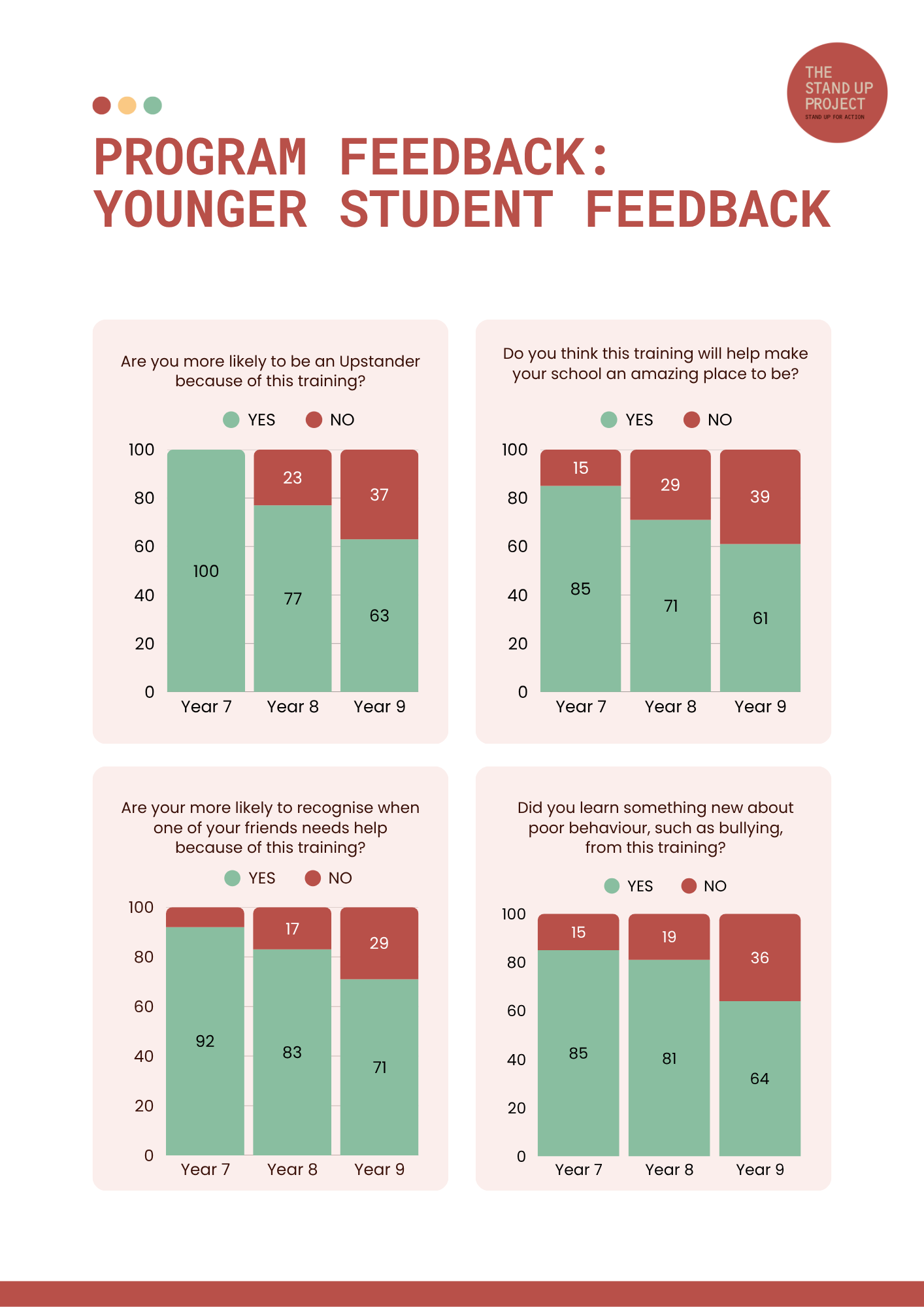
In one recent secondary school report, the overall findings were not as positive as the student leaders had hoped. At first glance, that could have felt disappointing. But once we examined the data more closely, a much clearer and more useful picture emerged.
The program had the strongest impact on Year 7 students, and that impact gradually reduced as the age gap between the student leaders and the students they were teaching increased.
Using Data to Strengthen the Work
This finding was important for two reasons.
First, it aligned with patterns we have seen in other schools. That gave us greater confidence that the result was meaningful, not random.
Second, it created an opportunity for a deeper conversation with the student leaders about influence. Rather than seeing the report as a judgement, we were able to use it as a tool for reflection. It helped the leaders think more critically about where their voice carries the most weight, how they can have the greatest impact on school culture, and how schools might structure future student-led work more effectively.
This is one of the reasons evaluation matters so much to us. It helps sharpen the work.
More Than a Report
For us, the evaluation report is not just a final document sent at the end of the program. It is part of the learning process.
It gives schools meaningful insight into the impact of student-led bullying prevention and culture change. It gives student leaders evidence that their contribution matters. And it gives all of us a clearer understanding of how student voice can be used most effectively.
Sometimes the most valuable findings are not the ones that simply confirm success. They are the ones that help refine the approach, deepen the learning, and strengthen the work moving forward.
That is what good evaluation should do.